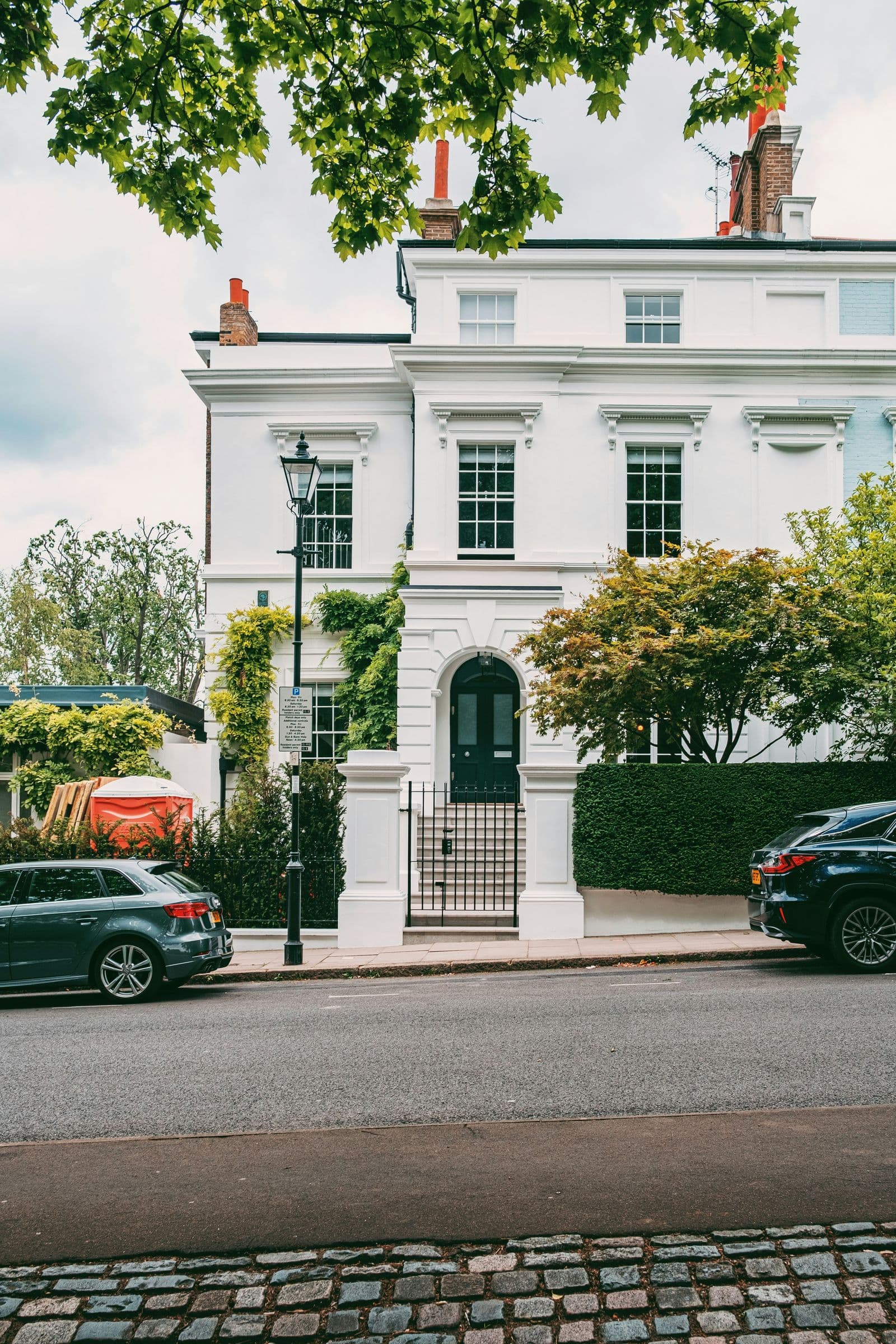
Exterior painting in London is governed by the weather in a way that interior painting simply is not. Apply masonry paint in the wrong conditions — too cold, too damp, or too hot — and the result will be poor adhesion, uneven drying, and a finish that fails within a year or two. As exterior painters working across Hampstead, Highgate, Muswell Hill, and North London year-round, we know exactly when conditions favour exterior work and when they do not.
The Ideal Conditions for Exterior Painting
Most exterior paints — including the masonry paints, timber treatments, and heritage coatings we use regularly — require the following conditions to cure properly:
- Air and surface temperature consistently above 5°C, and rising (12–18°C is ideal)
- Relative humidity below 85%
- No rain in the 24 hours before painting or during the paint's drying time
- No direct blazing sun on the surface being painted (which causes rapid surface drying and bubbling)
Late Spring and Early Summer: The Prime Window
May and June represent the best months for exterior painting in London. Temperatures are reliably above the 10°C threshold, rainfall is lower than in autumn and winter, days are long enough to complete full sections of a facade in one session, and the sun — while stronger than in spring — rarely causes the blistering heat that can affect very exposed south-facing walls in July and August.
If you are planning exterior painting for your Hampstead or Highgate home, booking a May or June slot is ideal. Our diary for these months typically fills up by February, so early booking is strongly advised.
September and October: The Second Window
The other reliable window for exterior painting in London is September and October. Temperatures remain above the threshold, rainfall is moderate, and the lower angle of the autumn sun means less direct glare on surfaces being painted. Many North London homeowners take advantage of this window to refresh exterior paintwork before winter sets in.
Summer Considerations
July and August can be excellent for exterior painting when temperatures are moderate, but very hot spells — increasingly common in London — create problems. Surface temperatures on south-facing rendered walls or dark-coloured timber can exceed 35°C, causing rapid surface drying that leaves the underlying paint still wet. This traps moisture and leads to blistering. We monitor forecasts carefully and schedule exterior painting to avoid the hottest parts of the day during heatwaves.
Autumn and Winter: Proceed with Caution
November through March is the most difficult period for exterior painting in London. Frost risk, persistent damp, and temperatures that regularly fall below the safe threshold mean exterior painting is either impossible or inadvisable for much of this period. It is not that it is never done — mild spells in November and March can be suitable — but we advise against booking exterior work in midwinter unless you are comfortable with the risk of delays.
The exception is specialist heritage coatings such as Keim mineral paints, which have slightly more tolerant application conditions than conventional masonry paints. Even so, frost protection is always required.
Planning Your Exterior Painting Project
The best approach is to book in late winter or early spring for a May–June start. This gives time for a detailed survey, colour selection, preparation work (including any render repairs or timber treatment), and procurement of materials. Call Hampstead Painting Company on 020 7101 3168 to plan your exterior painting project.
Share this article
Plan the Next Step
Use this guide as a starting point, then explore the most relevant service pages, recent project examples, or request a quote for your own property.
Exterior decorating and coating for render, stucco, masonry and exposed joinery, specified for the building rather than for the catalogue.
Interior painting and decorating for period and contemporary homes across Hampstead and North London, from a single room to a whole house.
Indicative bands for interiors, exteriors and specialist work across North London.
Tell us about your space, timescale, and finish requirements to get tailored advice.