A paint colour is only part of the specification. Finish determines how much light the painted surface reflects, while the particular product determines where it can be used and how it can be cleaned. For a Hampstead home, start by separating the surfaces: reception-room walls, ceilings, cornices, doors, skirting boards and window frames may need different products even when they share a colour.
Start with the room and its existing surfaces
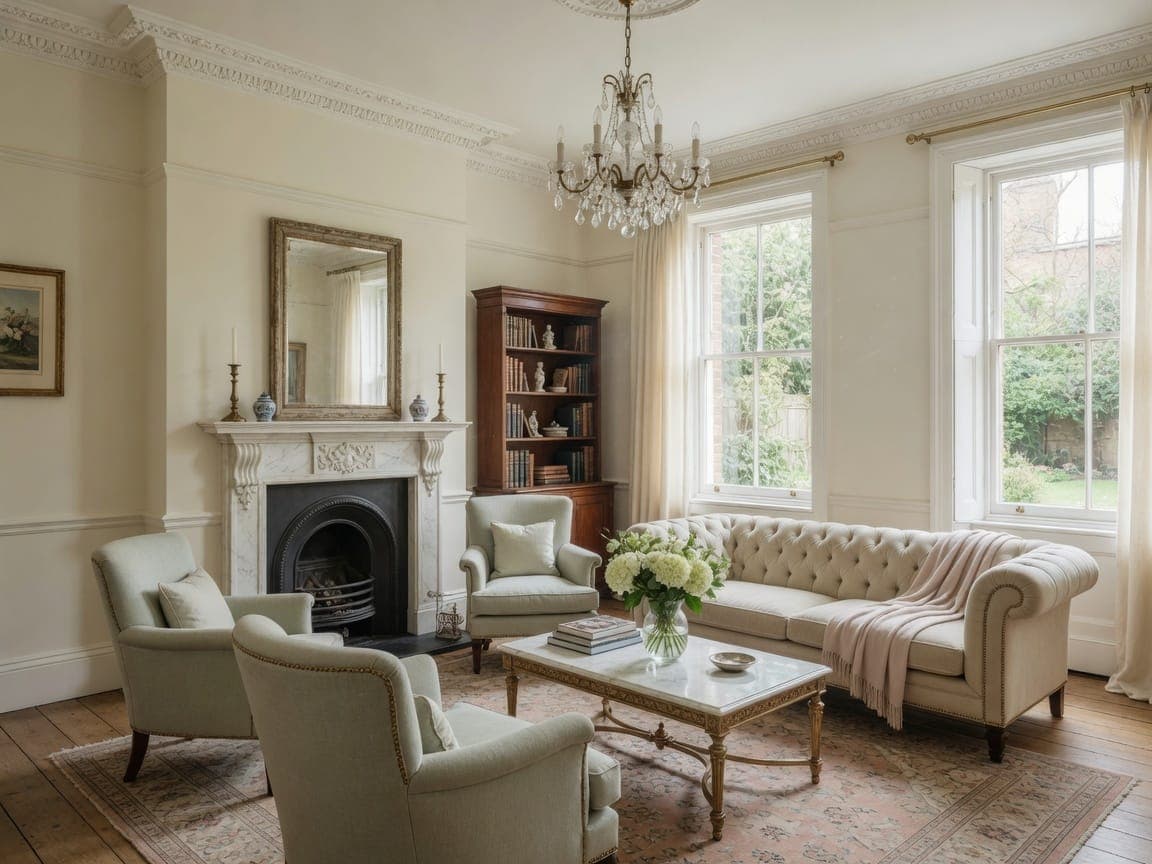
Walk through the room before ordering paint. In an NW3 period reception room, note the bay window, chimney breast, picture rail and any original plaster detail. Look along the walls from the window as well as straight at them. Raking daylight can make old repairs more noticeable than they appear under ceiling lights. Write down where a flat appearance matters and where hands, chairs or furniture regularly touch the surface.
Keep the condition assessment separate from the sheen decision. A lower-sheen finish can make small irregularities less conspicuous, but it does not repair loose paint or damaged plaster. Ask the decorator to identify the existing coating and explain the proposed preparation before selecting a finish for it. On old plaster, product compatibility needs checking rather than assuming any modern emulsion will suit.
Matt walls and ceilings
Matt finishes give a low-reflection appearance that can suit Hampstead's reception rooms, bedrooms and decorative ceilings. There is no single durability standard implied by the word matt: a product intended for quiet rooms differs from a washable matt designed for a busy hallway. Compare the manufacturer's stated uses and cleaning instructions instead of judging only by the name on the tin.
For example, Little Greene distinguishes Absolute Matt for quieter interior walls and ceilings from its washable Intelligent Matt. That distinction is useful when a reception room also serves as a children's play area. The desired appearance and the expected wear both belong in the specification. A sample of the intended finish is more informative than a colour card alone.
Eggshell, satin and gloss on joinery
Eggshell provides a restrained sheen; satin and gloss provide progressively more reflection within many paint ranges. The exact sheen varies between manufacturers and products, so avoid treating every eggshell or satin as interchangeable. Little Greene lists separate eggshell, satin and gloss finishes with different intended applications. Check the relevant technical sheet for the actual surface, including whether the product is suitable for interior or exterior use.
In a Hampstead hallway, consider the panelled doors, skirting and stair joinery together. Decide which details you want to emphasise and compare sample finishes alongside existing floor tiles or timber. Gloss can be a deliberate decorative choice; it is not automatically unsuitable for period woodwork. The condition of the surface and the quality of preparation will affect how the reflected light reads.
Kitchens, bathrooms and frequently touched areas
A kitchen wall beside a dining table has different demands from a cabinet door around a handle. Ask for separate product choices where necessary. The word eggshell alone does not establish suitability for cabinets, radiators, bathroom walls or an exterior front door. Make the surface and the proposed use explicit when checking the manufacturer's guidance.
For a family bathroom or a busy entrance, discuss cleaning as part of the brief. Tell the decorator which areas collect marks and how you normally clean them. Confirm when a newly painted surface can be cleaned and what cleaning method its manufacturer allows. Do not assume a dry-looking finish has already reached its full resistance to handling.
Compare samples in your Hampstead home
View the shortlisted colour and finish in the actual room during daylight and under the lamps you use in the evening. In a double reception room, compare the brighter window end with the part further inside the house. Look at the sample beside the fireplace, floor and adjoining woodwork. Decide whether the walls and joinery should blend together or remain visibly distinct.
Finally, record the agreed brand, product, colour and finish for each surface in the quotation. Keep those details after completion so future touch-ups use the intended specification. Ask which preparation and repairs are included, how rooms will be sequenced while occupied, and which areas need protection. These practical decisions make the finish selection part of a workable decorating plan.
Read Little Greene's finish guidance for current product applications, or explore our interior painting service and Hampstead NW3 coverage. To discuss your surfaces and preferred finish, request a quote.
Share this article
Book Painters Nearby
Explore the relevant local service and request a survey for your property.
Interior painting and decorating for period and contemporary homes across Hampstead and North London, from a single room to a whole house.
Exterior decorating and coating for render, stucco, masonry and exposed joinery, specified for the building rather than for the catalogue.
Local painters and decorators guide for Hampstead (NW3).
Local painters and decorators guide for West Hampstead & Kilburn (NW6).
Plan the Next Step
Use this guide as a starting point, then explore the most relevant service pages, recent project examples, or request a quote for your own property.
Interior painting and decorating for period and contemporary homes across Hampstead and North London, from a single room to a whole house.
Indicative bands for interiors, exteriors and specialist work across North London.
Tell us about your space, timescale, and finish requirements to get tailored advice.