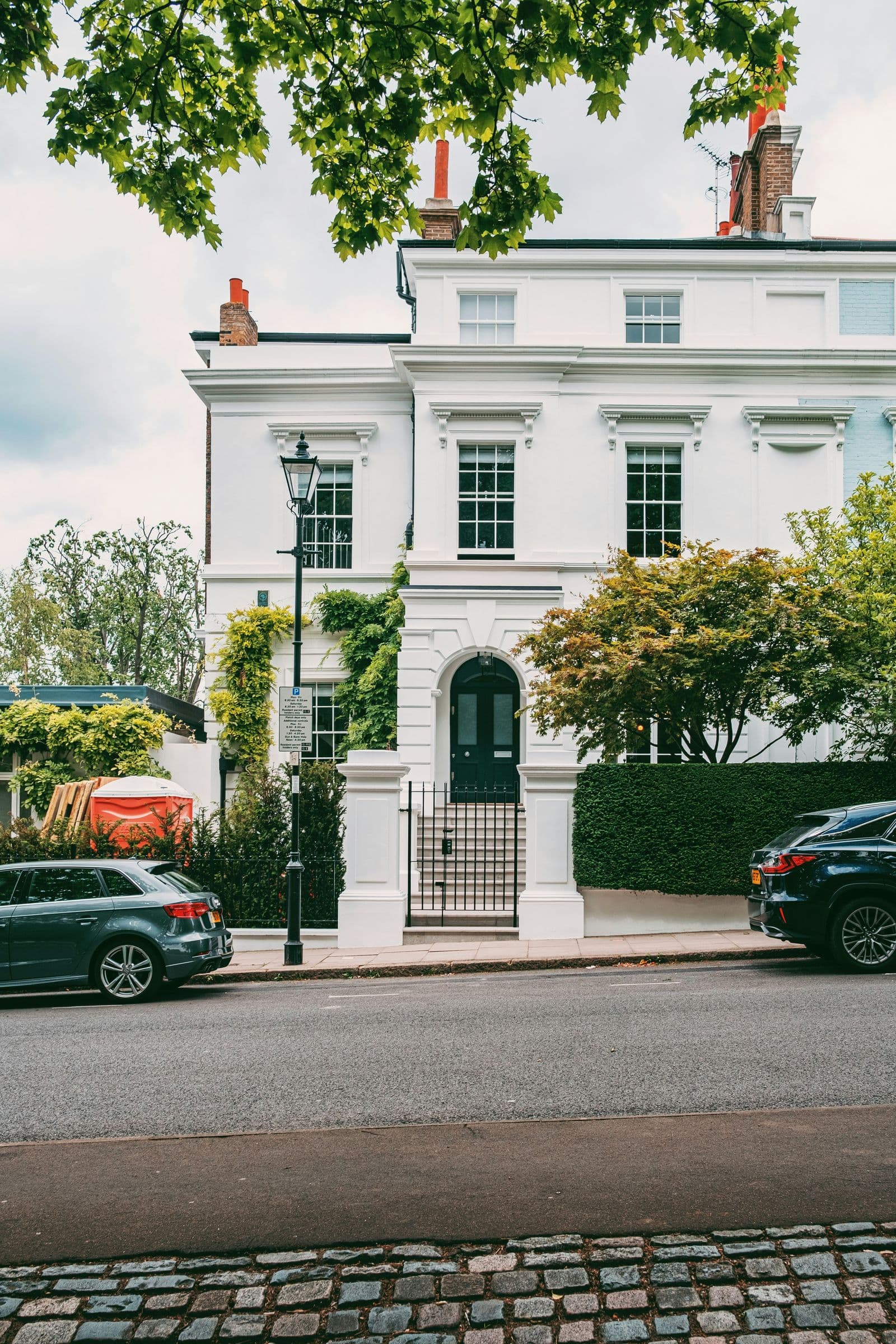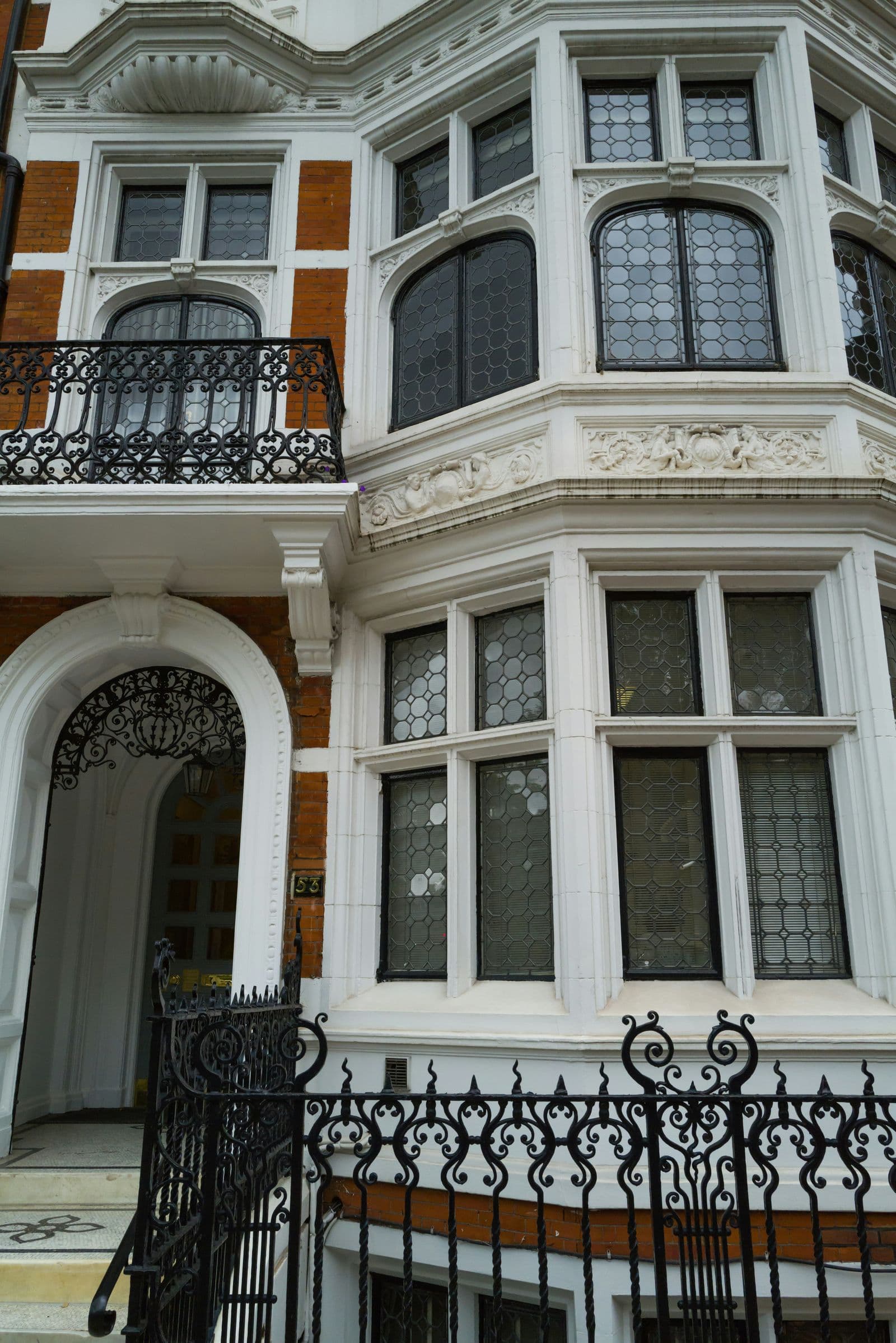
On a cold Wednesday morning in November, we began work on a complete sash window restoration at a Grade II listed Victorian villa on Downshire Hill, NW3 — one of Hampstead's most handsome residential streets, running from South End Road up towards the Heath. The brief: restore all 14 original timber sash windows, which had been neglected for several decades, to full working order without replacing any original fabric.
The Property
The property is a substantial five-bedroom double-fronted villa, built circa 1870 and listed Grade II for its largely intact Victorian interior and distinctive two-storey bay windows. Like many properties in the Hampstead Conservation Area, it sits under the jurisdiction of Camden Council's Heritage officer, and any structural repair — including window restoration — must comply with the relevant conservation guidance.
The Problem Audit
Before any work began, our lead craftsman conducted a full condition audit of all 14 windows. The findings were typical of Victorian timber sash windows of this age:
- Sash cords: 11 of 14 windows had at least one broken cotton cord, meaning sashes were propped open with wedges or permanently closed
- Timber decay: Four window sills had significant rot penetration; two lower sashes had rot in the meeting rail
- Paint buildup: Years of successive over-painting had obscured the original moulding profiles and caused the sashes to stick in their frames
- Draughts: Without draught-proofing, the windows were a significant source of heat loss — particularly problematic given the high ceilings and solid masonry walls
- Glazing: Three panes had cracked or broken, and much of the original linseed oil putty had dried, cracked, and was no longer weathertight
The Restoration Process
Step 1: Safe Removal of Sashes
All 14 windows were carefully removed from their frames — each sash lifted out after cutting the paint bond along the parting bead. Access to the pulley pockets allowed us to extract the existing weights and assess the pulley wheels. All pulleys were cleaned and lubricated with non-petroleum 3-in-1 oil.
Step 2: Paint Removal
We used a combination of hot air guns (at safe distance from glass) and Nitromors chemical stripper to remove the accumulated paint from all sash faces. The window frames were stripped by hand using specialist profile scrapers sized to match the original ovolo glazing bars. This revealed the original Victorian moulding profiles in perfect condition beneath the paint — a common and gratifying discovery on properties of this era.
Step 3: Timber Repair and Splicing
The four damaged sills were treated with Sikkens Cetol BL Repair epoxy consolidant injected into the soft rot and then filled with Sikkens Wood Filler. Two lower sashes with rot in the meeting rail required more significant repair: new sections of matching timber (reclaimed Victorian-profile timber sourced from a Hertfordshire architectural salvage yard) were spliced in using stainless steel loose tenon plates and marine-grade Cascamite adhesive.
Step 4: Sash Cord Replacement
All cords were replaced with pre-stretched braided cotton sash cord (3.5mm, matching the original specification). Each cord was fitted at the precise length to allow the sash to travel its full working range — a detail that is frequently mis-specified by less experienced contractors, resulting in sashes that either won't stay open or won't fully close.
Step 5: Draught-proofing
We fitted Exitex Kerfed Mohair pile draught-proofing seals into rebates routed into the frame, creating a virtually invisible seal that eliminated cold air infiltration while preserving the smooth operation of the sashes. The client subsequently reported a dramatic reduction in draughts and an improvement in heating efficiency.
Step 6: Glazing and Putty
The three cracked panes were replaced with 4mm float glass (in keeping with the heritage character of the property — the conservation officer had advised against secondary glazing). All original linseed oil putty was raked out and replaced with fresh linseed putty, allowed to skin before priming.
Step 7: Paint Application
The entire specification was Zinsser Bulls Eye 1-2-3 water-based primer (excellent adhesion to bare timber and old paint alike), followed by two coats of Teknos Futura Aqua 90 microporous semi-gloss in Farrow & Ball Wimborne White (matched to the clients' existing colour scheme). Microporous paint is essential for timber windows — it allows moisture vapour to pass through the film, preventing the blistering and peeling that destroys standard oil-based gloss on timber that naturally expands and contracts seasonally.
The Result
The restoration took our team of two craftsmen nine working days. All 14 windows now open, close, and lock perfectly. The draughts have gone. The original Victorian profiles are once again clearly visible. And the Wimborne White finish is indistinguishable in quality from factory-applied paint. Total cost: £6,800 — versus a quote the clients had received for uPVC replacement of approximately £22,000.
Can We Help With Your Sash Windows?
We restore sash windows throughout Hampstead, Belsize Park, South Hampstead, Swiss Cottage, Highgate, and all NW3 postcodes. If you have draughty, stuck, or deteriorating sash windows — particularly on a listed building or in a conservation area — please call us on 020 7101 3168 for a free assessment.
Share this article
Plan the Next Step
Use this guide as a starting point, then explore the most relevant service pages, recent project examples, or request a quote for your own property.
Specialist application of limewash, casein distemper, Keim mineral silicate, and breathable masonry coatings for period properties across Hampstead and NW3.
Complete sash window restoration for period properties in Hampstead NW3. Preserve your original timber frames, eliminate draughts, and achieve a flawless microporous finish.
Indicative bands for interiors, exteriors and specialist work across North London.
Tell us about your space, timescale, and finish requirements to get tailored advice.