Which Hampstead decorating note to read first
Which Hampstead painting guide to read, from period homes designated on 29 January 1968 to routine repair of wood and metalwork under guideline H18.
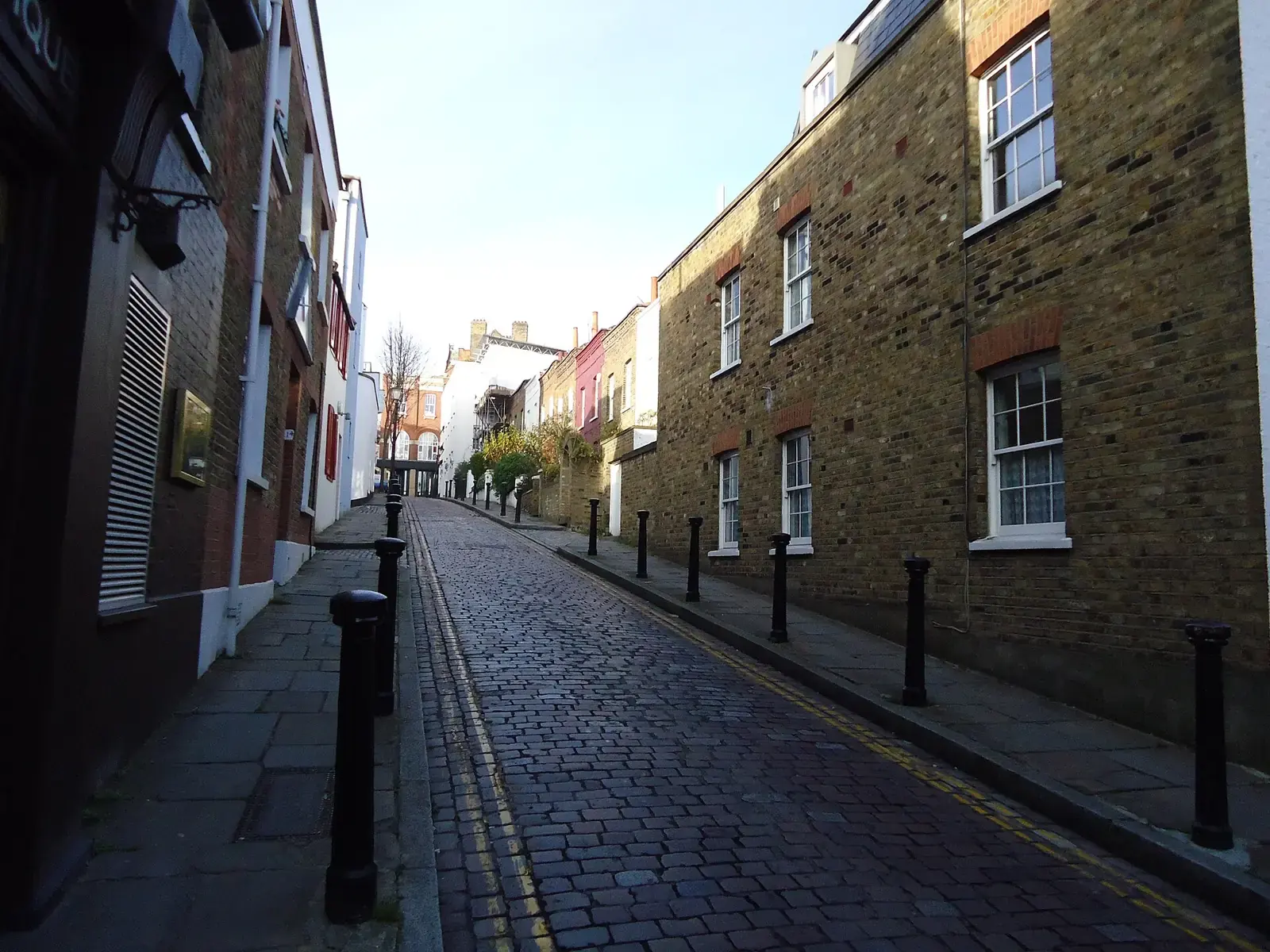
A resident deciding between five Hampstead notes
Five guides sit under this index, and they do not answer the same question. One asks what a period house in Hampstead demands before anyone talks about a coating. One asks how a stucco or brick front is got ready. One asks how timber sash windows are looked after. One asks how railings and basement areas are repainted without painting the wall behind them. One asks what changes a quotation, without publishing any figure. Choosing badly means reading a sash note when the real uncertainty is whether the brick may be coated at all. This page is the choice, written so that it does not stand in for the guides themselves.
The choice sits inside a conservation area with a known starting date. On 29 January 1968 Hampstead, North End, the Elms, Vale of Health and Downshire Hill were brought under conservation-area control together. That is why a decorating note for this neighbourhood is never only a list of tasks. Most work in the area still needs permission, even though, under the General Permitted Development Order 1995, some small extensions and some changes to windows that are not in the roof do not need permission on a single-family house. The guides are practical. They are not a substitute for that permission question, and this index only marks where the question sits.
Two Camden guidelines help a reader sort the five notes before opening any of them. Guideline H18 is the one that classes painting and repair of wood and metal, plus cleared gutters and repaired pointing, as everyday maintenance for a building in the Hampstead Conservation Area. Guideline H19 is the one that stops original brick being painted or covered with render or cladding unless that was how it began, because the area would look damaged and the covering would be extremely hard to undo. If the worry is ordinary upkeep of wood and metal, H18 is the lens. If the worry is a plan to coat bare brick, H19 is the lens, and the period-homes guide and the preparation guide are the ones that carry it into the work.
A period-home brief for the streets south of Hampstead is set out by Primrose Hill painters and decorators. Consent on the heath side is discussed by Highgate painters and decorators.
Open the period-homes guide when the question is the whole house
Read the period-homes guide if the uncertainty is which kind of Hampstead house is standing there, and what that kind allows. It is the long note. It is for the resident who has heard the date 29 January 1968 and wants the designation put next to actual streets, rather than left as a slogan. North End, the Elms, Vale of Health and Downshire Hill came into the same decision as Hampstead. The guide's job is to keep decoration inside that decision. This index does not retell the streets. It only says that the whole-house question is the reason to open that guide first, before a narrower note about putty or railings.
H19 is likely to be the sentence that resident is circling, even if they have not seen the number. Original brick is not a tired surface waiting for a unifying coat, unless paint, render or cladding was how it was first finished. The period-homes guide is where that rule is walked across different fronts. The preparation guide is where the same rule becomes a refusal to put brick into the stripping schedule. If the conversation at home is still which surfaces exist, start with the period-homes guide. If the surfaces are already known and the next worry is how to take failed coatings off safely, skip ahead to preparation.
Church Row has its own place page for anyone whose house is on that street and who wants the street note rather than the general guide. The period-homes guide will still be the right general reading alongside it, because the guide is about period houses across Hampstead, not about one terrace alone. Exterior painting, as a service page, is the practical counterpart when the decision is to have the outside done. Neither of those links replaces the guide. They sit next to it for a resident who has finished choosing and wants the street or the service.
Preparation, sashes and railings answer three narrower questions
Open the preparation guide when the question is how a front is made ready, not what the area contains. Stucco that is already the face of the house, and brick that must not be turned into a painted face, are different kinds of ready. H19 is the brick half of that distinction. The preparation guide is the one that stays with failed coatings, with what is left in place, and with the order of filling and priming. It is the wrong note for a resident whose only question is which street they live on. It is the right note when the tins are the next decision and the wall has not yet been touched. This index will not rehearse the steps. Rehearsing them would make the guide redundant and would blur the choice.
Open the sash guide when the question is the windows. Timber sashes that stick, putty that has left the glass, and the fear that the only answer is a new window, are a joinery question. They are not settled by a paragraph about garden walls or by the cost note. Guideline H18 includes painting and repair of wood, so sash maintenance sits inside routine upkeep, but the detail of easing a sash is not what H18 itself spells out. That detail is why a separate guide exists. The 1995 order is worth a glance first, because some changes to windows that are not in the roof do not need permission on a single-family house, while most conservation-area work still does. Keeping and recoating the sash that is already there is not the same idea as changing the window. The sash guide is about caring for the timber that is there. Permission for a change is a different conversation, and the order of 1995 is the reason not to assume every window job is automatically either free of control or fully controlled.
Open the railings guide when the question is the iron and the front area, including a basement area where the house has one. Boundaries set houses off from the pavement. Painting the bars is not the same task as painting the pier, the porch or the wall of an area. H18's mention of metalwork is why railing repainting can be routine maintenance. The separate guide exists because metal next to masonry is easy to muddle on the day. A resident who came here worried about brick being coated should not stop at the railings note. H19 is about the brick, and the railings note will not answer it. A resident who came here worried about flaking bars, gates and the edge of a lightwell should not stop at the period-homes guide either. The narrower note is the one that stays with the iron.
The cost note, and what it will refuse to tell you
Open the cost guide only when the question is what changes a quotation. It will not name a sum, and it should not be opened in the hope that this index has hidden one. The things that change the list of work are access to the street, whether original brick is in or out of the specification, how much joinery exists, and how older paint has to be prepared. H19 is the exclusion of original brick. H18 is the inclusion of wood, metal, gutters and pointing as routine items worth writing as items. The cost guide is where that inclusion and that exclusion are treated as the shape of a quotation. The shape is not a list of figures, and anyone who needs a figure has to have the house seen and the items written down afterwards.
That is a different question from how to prepare stucco, and a different question from how to ease a sash. Residents sometimes start with money because it is the question they can ask without knowing the fabric. In Hampstead the fabric decides the items, so the cost guide keeps sending the reader back to a visit. Use it to understand why two houses on different streets do not share a template. Do not use it as the preparation guide under another name. Do not use it for the account of the designation either. The date 29 January 1968, and the places included with Hampstead, are the period-homes subject. The cost note assumes that framework and talks about what then changes the written list.
A sensible order for someone who wants all five is period homes, then preparation, then whichever of sashes or railings matches the failing element, then the cost note last. The cost note last means the items are already understood. Reading it first is still legitimate if the only decision today is whether to book a visit, but the visit, not this index, produces the quotation. Exterior painting as a service is the page to open when the choice has moved from reading to having the work described for one house. The conservation guide is the page to open when the question has moved from technique to the wider rules.
Permission, H18 and H19, without mixing the guides together
The 1995 General Permitted Development Order is the permission nuance that belongs on this index because it changes which guide a resident thinks they need. Some small extensions, and some changes to windows that are not in the roof, do not need permission on a single-family house. The appraisal still expects permission for most conservation-area work. A reader who has heard that windows are uncontrolled can easily open the sash guide expecting a free hand to replace them. That is the wrong expectation. The sash guide is about keeping and repainting timber. The order of 1995 is about a limited class of changes on a single-family house, not about every elevation in Hampstead. Roof windows are outside the leniency the appraisal notes, because the leniency it records is for changes to windows that are not in the roof. Most other work still needs permission. Holding those limits in mind stops the practical guides being read as consents.
H18 is the maintenance sentence to pin above the sash guide, the railings guide and the ordinary lines of a quotation. Painting and repairing wood and metal, clearing gutters and repairing pointing prolong a building. They are the work the five notes keep returning to, each from its own side. H19 is the sentence to pin above any urge to paint original brick, and it is why the period-homes guide and the preparation guide exist as well as a cost note that refuses to put a brick coating, which should not be specified, onto the list of items. Neither guideline is a product. Neither is a timetable. They are the sort of rules that tell a resident which note to open.
The links below are the five guides, plus the conservation guide, the Church Row place page, and exterior painting. Church Row is linked because a resident on that street will want the place page as well as a guide, not because this index is about to describe the street. Exterior painting is linked because, once the right guide has been read, the service page is where the work itself is set out in general. The conservation guide is linked for the rules that sit above any one trade sequence. Open one guide for one question. The designation on 29 January 1968, shared with North End, the Elms, Vale of Health and Downshire Hill, is the reason the questions are split this way instead of being collapsed into a single decorating checklist.
Questions about choosing a Hampstead guide
Which note answers whether original brick in Hampstead should be painted?
Start with the period-homes guide, and use the preparation guide when the issue is how the front will be got ready. Guideline H19 leaves original brick unpainted, and it also rules out render and cladding where those were not the original finish. The cost note only explains that such brick stays out of a quotation. It does not teach the preparation. The sash and railings notes do not settle the brick question.
Do the guides mean permission is never needed?
No. Under the General Permitted Development Order 1995, some small extensions and some changes to windows that are not in the roof do not need permission on a single-family house. Most work in the conservation area still does. The area dates from 29 January 1968. That one decision took in Hampstead and also North End, the Elms, Vale of Health and Downshire Hill. The guides describe upkeep. They do not grant consent.
Which guide is about ordinary upkeep rather than about a new finish on brick?
Guideline H18 frames ordinary upkeep as painting and repair of wood and metalwork, clearing gutters and repairing pointing. The sash guide and the railings guide are the narrow notes for those materials. The period-homes guide sets that upkeep inside the conservation area. The preparation guide is for getting a legitimate surface ready. None of them is a brief to coat original brick, which H19 rules out unless that coating was the original treatment.
Sources
Related reading
- The period-homes guide, for the whole-house question inside the 29 January 1968 area
- The preparation guide, for getting stucco or brick ready without coating original brick
- The sash guide, for timber windows rather than for boundaries or quotations
- The railings guide, for iron and basement areas kept separate from the wall
- The cost guide, for what changes an itemised quotation after a visit
- The conservation guide, for rules that sit above any one decorating sequence
- The Church Row place page, for readers whose house is on that street
- Exterior painting, once the right Hampstead guide has been chosen
Pick the Hampstead note that matches the question, then have the house itself seen before any quotation is written. Book the visit that follows the reading.